
How does our work create value?
Why do we even bother to go to work in the first place? Clearly, we work for food, shelter, and frivolous consumer items, so I guess the question should be, “Why do organizations pay us to work for them?”
Are we trying to set the record for attending the most Zoom meetings in a week? Ask thought provoking questions on Slack? Doom scroll on LinkedIn? Probably not.
Theoretically at least, we work to provide value, and that value is measured as work output. Since that sounds like what comes out of a horse after it eats a lot of grass, we like to refer to the fruits of our labor as assets. Assets, often in digital form, can be anything from a well-documented sales funnel to a piece of grand slam marketing content that generates gobs of leads. Assets are something of value.
But you can’t create assets if you’re stuck on Google Meet all day. Don’t get me wrong, video calls are swell. They provide a lovely forum where colleagues can gather to talk about how they’re going to create value, establish action items for participants, and exit with a sense of accomplishment. Of course, since so many of us bounce from meeting to meeting all day, most days, it’s hard to find time to actually, you know, accomplish something. So many of us are stuck on so many calls that we often don’t get our tasks completed and that leads to more meetings aimed at discovering why nothing is getting done.
Hibiscus can help. As a freelancer, I don’t get stuck in as many meetings as I used to. But when I do, unless the meeting is focused on a clear outcome such as getting help from a subject matter expert to make credible marketing content, I find myself seeking amusement while bloviating ensues.
Why not get some real work done instead of playing more Balatro?
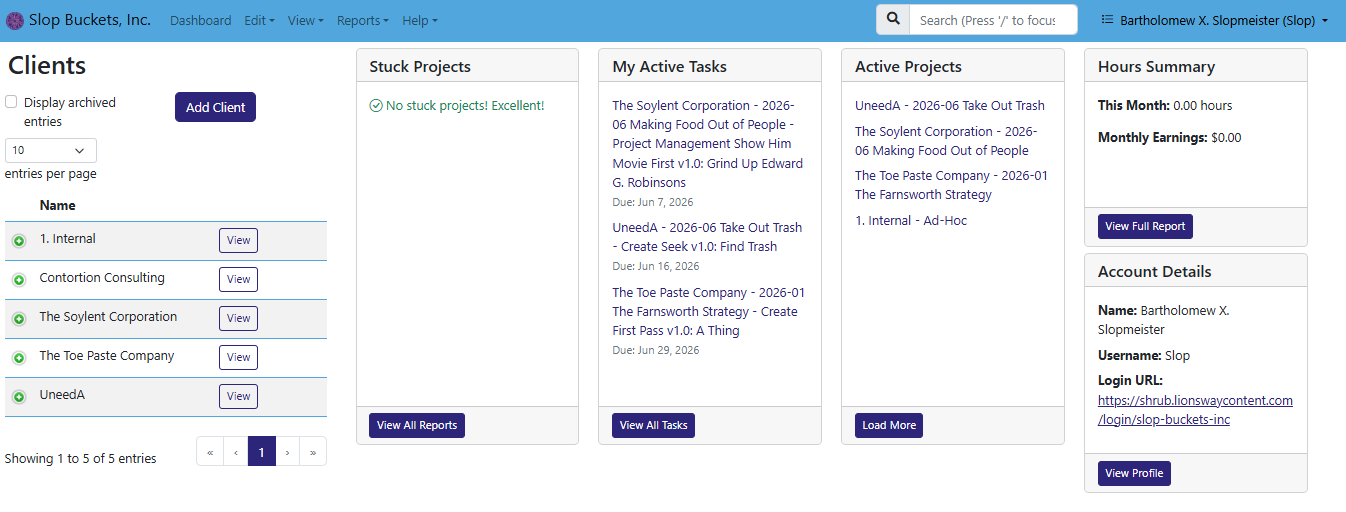
Enter the Hibiscus dashboard!
There’s a reason I never turn my camera on during Zoom calls. One, no one looks good on a video call. No one. Not even good looking people. So if I’m on a call and someone is blabbering endlessly about their kid’s soccer game, I don’t have to pretend to be paying attention. I can focus on the Hibiscus dashboard to see which is the most important task for me to complete after the meeting is over.
Completing tasks leads to work output — something like the draft version of a technical paper. A draft is collaborated upon, revised, and reworked. With more worky and less talky, that draft becomes an asset, something of value.
Imagine using Hibiscus while on Zoom calls! Plan your work output for the next day or your week. Run a report or two. Create some follow up tasks. Hell, maybe even send an invoice or two (Coming soon!).
So if you’re a freelancer looking for ways to be productive with a packed calendar, check out Hibiscus.
We built it for you.