
Make It Easier to Reinvent the Wheel
Freelancers often get paid by the project and that often involves writing up a statement of work (SOW) outlining the deliverables, tasks at hand, and assumptions about things like the number of expected revision cycles. Before an SOW is signed, chances are you provide a formal or informal quote. Something like: Upon completion, Project X will result in Asset Y and cost $Z.
When scoping a project for a client, you will ask yourself, “How much effort will this take to accomplish and how much should I estimate it will cost the client?” Without readily available, easily searchable data pertaining to similar projects from the past, we’re often left guesstimating or furrowing our brow to remember specifics from past projects.
Widget A took B hours to create before it was approved by the client. It cost $C. Is that widget like the widget my client asked for? Or have we made other widgets more closely aligned with this one? How long did those take and how much did they cost?
Too often, we found ourselves reinventing the wheel. We scoured through data on multiple platforms, in emails, or from memories stored deep in the caverns of our minds. All this effort was spent trying to come up with a realistic number for the client or, worse yet, totally whiffing an estimate. By the project’s end, we found ourselves justifying the additional cost to the client — or eating it.
Hibiscus can help!
Use Hibiscus long enough and you will accumulate granular cost and revenue data on every asset you create. Since Hibiscus is easily searchable, you can quickly find projects by asset type, client, whatever. That makes it easy to compare multiple projects and come up with an accurate estimate for your client.
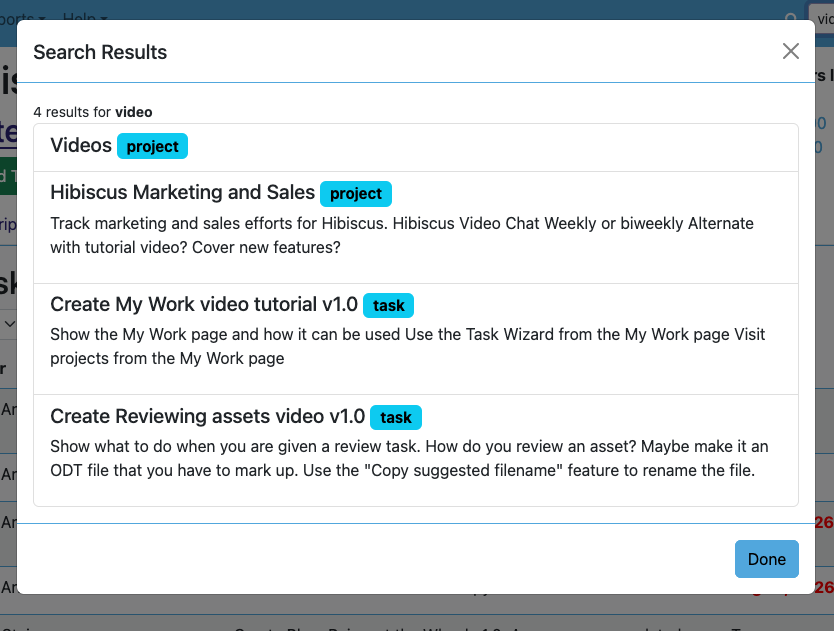
Hibiscus provides convenient search capabilities.
But wait! There’s more! There is a lot of value to be found having all of your relevant operational data on one easily searchable platform. You can quickly and easily perform post mortems on projects, determining how and why you got specific outcomes. From any project’s dashboard view, you can see the number of revision cycles required for an asset to reach approval and use information in the project log to ascertain why so many versions were needed. This can inform future project estimates.
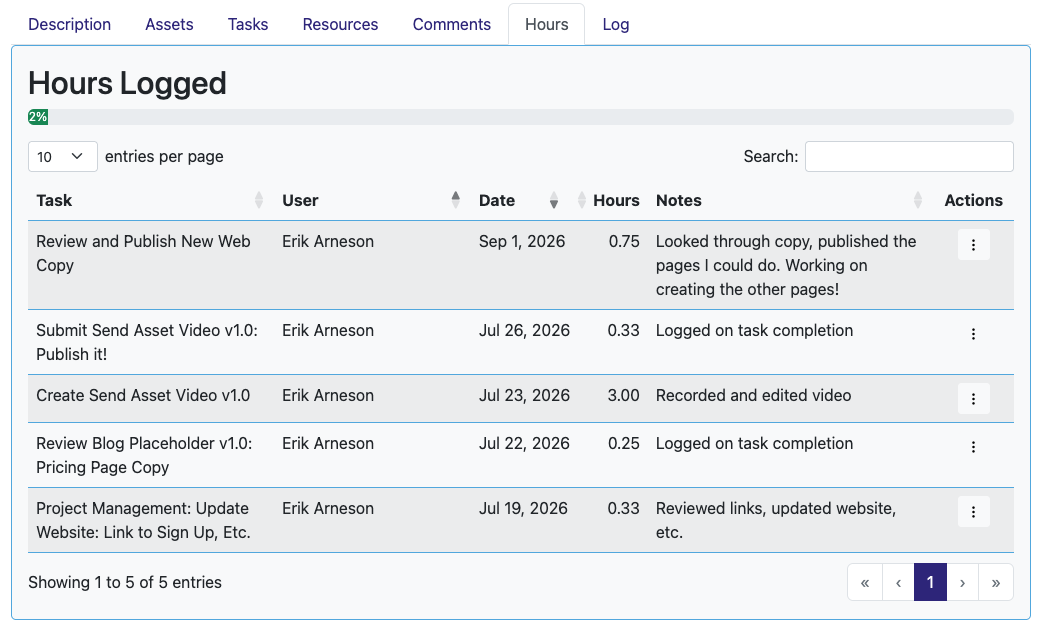
Log all of your hours with notes, and then review them later.
Planning ahead with Hibiscus to manage projects, assets, and tasks is a key feature of the platform. So is using historical data to map out your year. As freelancers, we don’t get paid a salary, so our income can vary widely by month.
With Hibiscus, you can run billable hours and revenue reports dating back to your first project using the application. Over time, Hibiscus makes it easy to identify months where revenue is often significantly higher or lower than average. During the holidays, there are typically fewer billable hours at Lion’s Way, often making January among the leaner months. I always forget that, but Hibiscus remembers it for me. With the transparency provided by Hibiscus, I can plan my personal finances over time with greater accuracy. So overspend at Christmas with confidence thanks to Hibiscus!
New estimates, faster!
Hibiscus users struggle less with new project estimates and long term planning because they have all relevant data at their fingertips. No more crossing your fingers when issuing SOWs. When you have a firmer grip on the details of past projects, you are better able to move forward with less guesswork and error. So go forth! Do your freelance thing with more confidence!
And click here to discover more ways Hibiscus can help you run your business more efficiently and effectively.